

Categories
Your ChatGPT Is Showing: 2026, The Year of the Downfall of AI Slop
Confession time. I am just as guilty as the next person.
I admit that I let AI create quite a few of my LinkedIn posts, and I admit that some of them were AI slop.
They said a lot without saying anything.
Why did I let the AI speak for me?
Because I’m time poor, I tell myself.
Also, thinking up creative posts takes a level of creativity I don’t always have. It was fun to just type in a prompt and see what I got.
Do you know what I mean?
That period of time when AI felt like magic. Type a prompt, get an article. Ask for an image, watch it appear in seconds. It was genuinely useful, genuinely impressive, and genuinely exciting.
I drank the cool aid.
I think we can all agree that time passed a few AI-generated posters ago.

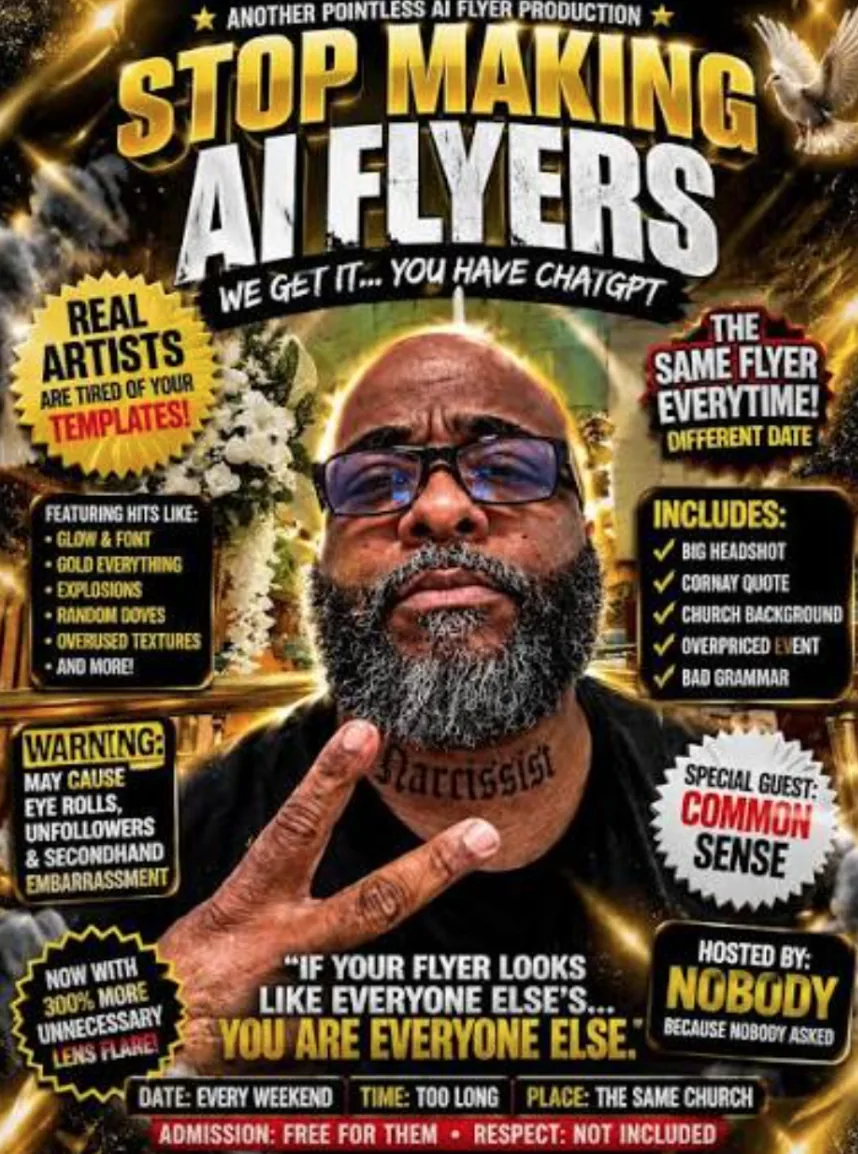
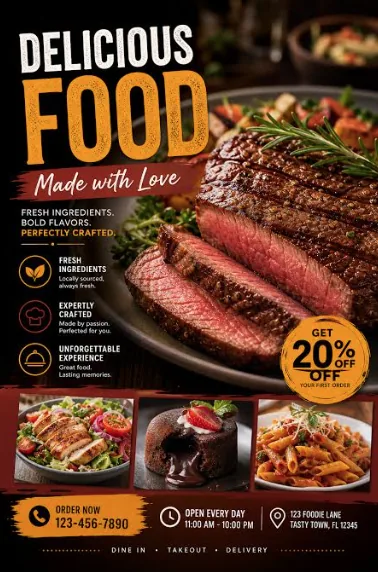
Somewhere between the first wave of novelty and now, AI content went from “wow, how did it do that” to “oh, this again.”
Feeds filled up with the same over-explained captions, the same suspiciously symmetrical faces, the same videos of things that could never actually happen.
I started to recognise the tone of voice a few weeks in.
‘It’s not this, it’s that’ and other empty clever statements that say nothing.
People stopped being fooled and started being tired. The term for it now has a name, and Merriam-Webster made it official: “slop” was selected as the 2025 Word of the Year, defined as low-quality digital content produced at scale by artificial intelligence.
When Did It Stop Feeling Like Magic?
The tipping point wasn’t one single AI video on my mom’s WhatsApp status. It was the volume of it and just how easy it became to recognise it as AI.
As generative tools became faster, cheaper, and easier to use, the sheer amount of AI-made content exploded, and quality didn’t come along for the ride. Research from Kapwing found that 21 to 33 percent of YouTube’s feed may now consist of AI slop videos.
Nearly one in ten of the fastest-growing YouTube channels globally, as of August 2025, exist purely to promote AI-generated content.
This video from Pouty Frenchie, one of the fastest growing YouTube channels boasting over 1.3 million subscribers, got over 250 million views.
https://youtube.com/shorts/07Z761wZosE?si=2-rWyuA1qX3k9Erg
The BBC put it plainly in a recent piece on the shift: AI slop is transforming social media, and a backlash is brewing. What used to feel like a clever party trick now feels like white noise, bots posting to bots, optimised for a feed that can’t tell the difference and, increasingly, an audience that can.
The Tells Are Getting Obvious
Coursera’s breakdown of AI slop lays out exactly what gives it away. Text that’s repetitive, vague, oddly formal, and strangely emotionless despite trying hard not to be. Images with the wrong number of fingers, the too-smooth “plastic” skin, lighting that doesn’t quite make sense. Videos with movement that’s almost right but not quite, voiceovers that sound synthetic no matter how much they’re dressed up.
And there’s a newer, quieter tell that copywriters and marketers keep running into: leftover formatting.
AI chat tools write in markdown behind the scenes, symbols like asterisks for bold or dashes for bullet points. The chat window converts those symbols into proper formatting. You never see the raw code. But when someone copies a response straight out of the chat and pastes it into a caption or email that doesn’t do the same conversion, those symbols just sit there. A post shows up with **partnership** instead of a bolded word.
The tells go beyond that too. The em dash (that’s that long dash that’s actually good English but now it’s a mark of AI) shows up constantly in AI writing, doing the job a comma or full stop used to do. And that awful AI rhythm gives it away: “It’s not X. It’s Y” makes me want to barf.
That contrastive pattern repeats so often across AI copy that it’s stopped feeling clever and started feeling like a watermark.
None of these are proof on their own. But stack a stray asterisk, an em dash, and an “it’s not this, it’s that” in one paragraph, and most readers can spot it now. That’s part of why the fatigue has set in so fast. The seams of your “trying to get it done quicker” is showing.
Platforms Are Catching Up
Platforms are starting to build in accountability.
LinkedIn has gone furthest.
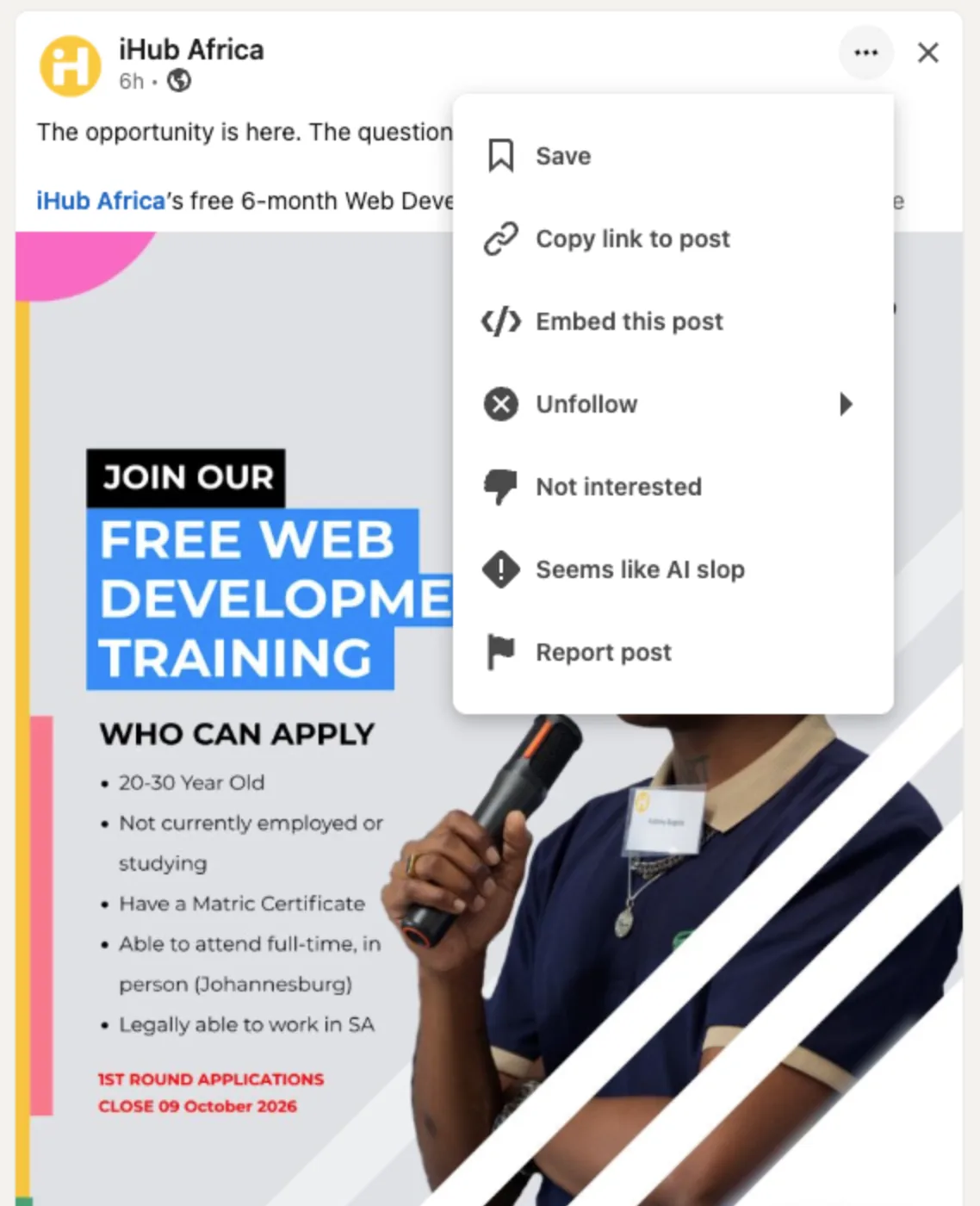
In late July 2026 it launched a “Seems like AI slop” option in the three dots menu at the top of every post.
See something a robot wrote and you tap it. The button was pressed more than a million times in its first few weeks, and LinkedIn says members now see 40 percent fewer views on content it classifies as slop.
Creators get a private warning too, so you may soon open your analytics and find out your audience thinks a robot wrote your post. Critics say a report button can be weaponised against posts people simply disagree with, and LinkedIn’s owner, Microsoft, sells plenty of AI.
Fair points, but the direction is clear. Every stray asterisk and “it’s not this, it’s that” is now a reason for a reader to tap those three dots.
Meta has also joined in on calling slop out.
Meta now labels AI-touched content across Facebook, Instagram, and Threads, and it goes further than most people realise. It’s not just accounts built entirely by AI. One AI-edited photo, one AI-generated graphic element, a disclosed AI-assisted caption, any of it can trigger a label. Meta’s own policy on this confirms labels apply whenever AI indicators are detected in a file or someone discloses AI use, no matter how small the AI’s role was.
Google has done the same on ads. As of July 2026, Google requires or permits AI labels on ad creatives made or modified with AI, in step with transparency laws in the EU, India, and New York.
The platforms built on engagement are now admitting unlabelled AI content.
Our B2B Agency Approach to AI
As an owner of a leading B2B Agency, of course we work with AI.
AI makes my team faster, and able to deliver great work, quickly.
HOWEVER we human-think first.
We draft the skeleton or outline.
Then we ask AI to weigh in.
Then we edit heavily and improve.
AI is meant to make us better, not do the whole job for us, and as an agency, we DO NOT abdicate to AI.
The Human Cost on Freelancers
If you’re a business creating AI work, all of your AI-generated content still has to be fixed by someone, and that someone is very often a freelancer, working for less than the job is worth.
The Guardian’s recent reporting on job listings for correcting AI-generated work jumped 87 percent on Freelancer.com between August 2025 and June 2026, totalling nearly 11,000 posts globally. Upwork saw a 70 percent year-on-year rise in the same kind of work. Fiverr searches for “AI cleanup” services grew more than twentyfold since 2023.
One freelance designer told the Guardian that by 2025, 90 percent of her incoming logo and packaging requests were AI-generated content that needed fixing, work that made up 60 to 70 percent of her annual income. The pattern repeats across writers, editors, and video professionals: clients generate a fast, cheap first draft with AI, then outsource the actual hard part, the part that makes it usable, to a human who gets paid like the job is quick when it rarely is.
So the “efficiency” AI promised has a real cost attached, and it’s landing on the people doing the cleanup, not the people who skipped the work in the first place.
Which is why our clients use us in the first place, because our work is quality, but it’s not cheap.
So Where Does That Leave Everyone Making Content?
Personally, I hate AI but I use it and I see its benefits.
The technology isn’t going anywhere, and used well, it still saves real time. But the free pass is over. People can tell now. Platforms are starting to label it.
The brands and creators who’ll come out ahead aren’t the ones avoiding AI entirely. They’re the ones treating it as a first draft, prompting and adding the human touch, and doing the actual work of making it sound like a person wrote it.
So dear reader, this is your warning.
Use AI, but proceed with caution.
Or use us, that’s the better option!
ABOUT THE AUTHOR

Dylan Kohlstädt is the founder and CEO of Shift ONE and a digital marketing expert with over 25 years of B2B marketing experience, an MBA, and an IMM Marketing Diploma. She’s worked with top manufacturing, energy, and engineering companies worldwide and knows how to help them grow.
Book Dylan Kohlstädt for digital marketing training or workshop facilitation.
Ready to start innovating your brand with us?
Get in touch now.
